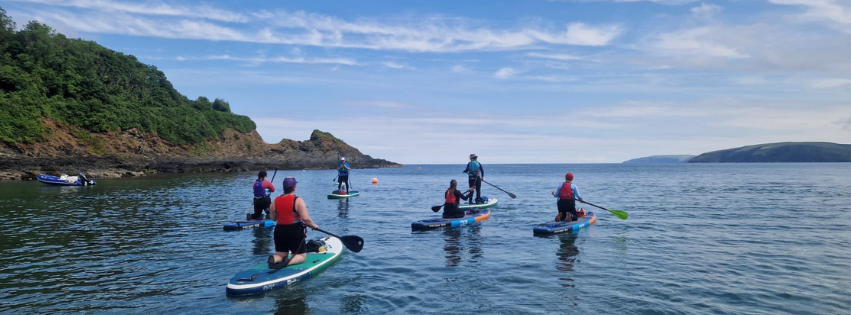


February might feel quiet outdoors, but on Welsh rivers, lakes and coastlines, the natural world is bursting into life. Whether you're paddling inland waters or exploring our sea cliffs by kayak, this is one of the most sensitive and spectacular times of the year.
Here’s what to look for, and how to paddle responsibly while Wales’ wildlife gets to work.
Beneath the Surface: Spawning Fish
Through winter and into early spring, migratory fish such as salmon and sea trout are deep in their breeding season. Their gravel nests, known as redds, lie in the shallower, cleaner riffles of many Welsh rivers. These areas can be easily damaged by paddlers or wading, and it is an offence under the Salmon and Freshwater Fisheries Act to disturb spawning fish or redds.
Look out for patches of bright, freshly turned gravel, a sign of an active redd, and steer clear by keeping to deeper channels. With stocks at historic lows, avoiding disturbance is one of the simplest and most powerful things we can do to help them recover.
On the Banks: Birds Preparing to Nest
The official nesting season runs from 1 March to 30 August, but many species begin pairing up and building nests in February, especially in mild weather.
- Along rivers, canals and lakes you may see:
- Great Crested Grebes performing their incredible weed‑dance courtship.
- Herons congregating at communal nesting sites called heronries, often noisy with activity in February.
- Woodpeckers drumming, kingfishers defending territories, and early songbirds beginning to claim nest sites.
When paddling, give overhanging branches, reedbeds and low banks extra space, these are prime nesting spots.
At the Coast: Wildlife Along Welsh Sea Cliffs
If you're sea kayaking, winter and early spring offer some of Wales’ most awe‑inspiring wildlife encounters. Along our cliffs and offshore islands you might see:
- Grey seals hauled out on quiet beaches or slipping past your bow.
- Bottlenose dolphins in Cardigan Bay, one of the UK’s largest resident populations.
- Porpoises working the tidal races at spots like South Stack.
- Early returners among our huge seabird colonies, from guillemots and razorbills to kittiwakes and puffins (the main influx arrives March–April). Sites like Skomer, Ramsey, Skokholm, Gogarth, Penderi Cliffs and South Stack are internationally important for these birds.
- Choughs wheeling around the cliffs of Pembrokeshire and Anglesey.
These areas are rich, fragile habitats. Keeping distance from haul‑out sites and avoiding sudden approach around bird‑cliff bases helps reduce unnecessary stress.
Paddle with Care, Watch with Wonder
Whether you’re gliding down a quiet river or weaving beneath a towering sea cliff, February is a month of quiet magic. Fish are carving their future into gravel beds, birds are pairing up, and marine mammals are moving through some of the richest waters in Britain.
By giving wildlife space and paddling lightly, we help keep these natural rhythms thriving.
Useful Links
Fish & River Ecology
- Winter Paddling and Spawning Fish (Paddle Cymru) https://www.paddlecymru.org.uk/winter-paddling-and-spawning-fish
- NRW Fishing Seasons Overview
https://naturalresourceswales.gov.uk/guidance-and-advice/business-sectors/fisheries/angling-byelaws/when-what-and-where-you-can-fish/?lang=en
Birdlife & Nesting
- Bird Nesting Guidance (Bannau Brycheiniog)
https://bannau.wales/planning/wild-env-protection/protected-species/birds-and-bird-nests/ - Wildlife to Spot in February (Wildlife Trust Wales)
https://www.welshwildlife.org/blog/welsh-wildlife-spot-february - RSPB Nature in February
https://www.rspb.org.uk/birds-and-wildlife/the-year-in-nature/the-year-in-nature-february
Sea Kayaking & Coastal Wildlife
- Wild Seas Wales Coastal Wildlife Map https://wildseas.wales/discover/
- Wales Coast Path – Wildlife Watching https://www.walescoastpath.gov.uk/things-to-do/wildlife-watching/?lang=en
- Paddle Cymru Sea Kayaking Routes https://www.paddlecymru.org.uk/sea
CONTACT THE MEDIA TEAM
If you have a story that would be of interest to the Paddle Cymru team please get in touch using the online contact form linked below or get in contact using one of our social feeds.
SIGN UP TO CEUFAD MAGAZINE
Ceufad is our quarterly magazine, covering everything that's important in Welsh paddlesport.
Share Post